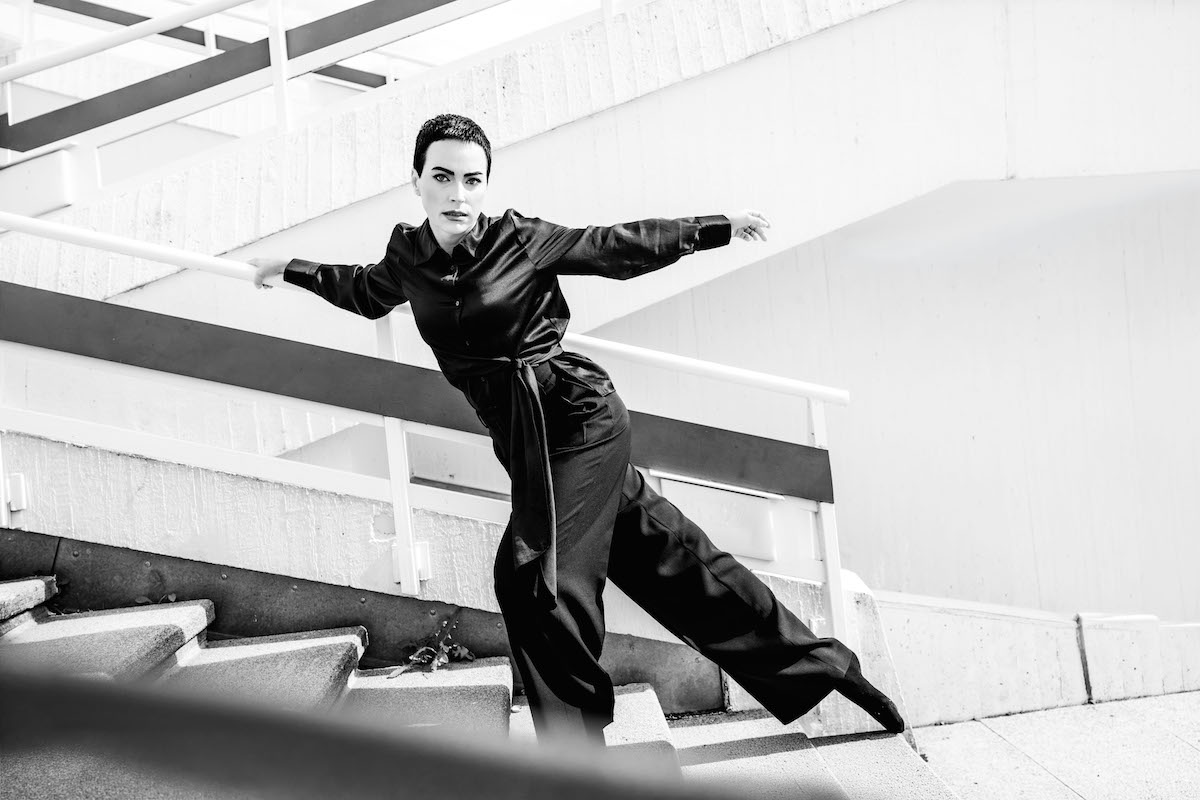
For the Romanian-born artist Marlon Red space is never a neutral container. Rather, it is a structure shaped by memory, perception, movement, and the bodies that inhabit it. After training at the Kunstakademie Düsseldorf, where she studied with Markus Lüpertz and later Thomas Grünfeld, Red gradually expanded her practice beyond painting. She incorporated geometry, repetition, installation, sound, and performance into enter her visual language. This evolution finds its most complex expression in Movement Hybris, an open and evolving project that conceives of the body as a form of “living, constantly transforming architecture.” In this interview, she discusses the formative experiences that shaped her artistic identity, her transition from painting to performance art, and the development of Movement Hybris. She also reflects on the relationship between body and space, memory and presence, and control and transformation.
In what ways did your family environment influence your perception of images and, more importantly, of space?
I grew up in Bistrița, Transylvania, in an environment where art, drawing, architecture and culture were simply part of everyday life. My father was exceptionally talented at drawing and painting. He had originally wanted to study medicine, like one of his twin brothers, who became an internist, but when his mother became ill with cancer, he had to take a different path and trained as an electrical engineer. Nevertheless, his artistic talent remained very strong. Drawing and painting came naturally to him, as they did to many members of his family. My mother, Marcela, was a technical draftsman and worked as the head of the architectural drafting department. So I grew up surrounded by drawings, plans, structures and architectural thinking, but also by artists, literature and a strong cultural environment. We were familiar from an early age with the work of established Romanian artists such as Ciprian and Ion Brădea, Grigorescu and others. Literature was equally important in my family. Books were not something exceptional; they were simply a natural and necessary part of everyday life. There was also a deeper cultural history behind this. My great-grandparents came from an aristocratic background, and education and culture had always been considered essential in the family. Some members of the family studied as far as Moscow and Saint Petersburg. My great-grandfather was a Knight of the First Class of the Order of the Crown and was one of the important figures around King Michael I. My great-grandmother was Austrian. She came from Austria with her mother to Bistrița in the years 1944–45, where they eventually acquired a house and land. Looking back, I think all of this formed a kind of cultural and artistic language within me during childhood. Much of it happened unconsciously. I didn’t grow up thinking, I am learning about art, architecture and space. It was simply the world I was living in. That environment left a deep structural imprint on me and, I believe, also on my two brothers. It shaped the way we perceive images, structures, space and the relationship between them. And perhaps this is why, even today, I don’t experience space simply as something physical. I perceive it as something that carries memory, structure, atmosphere and meaning.
You were fascinated house interiors, courtyards, atmospheres and spatial situations as a child. What were you looking for then, and what are you looking for today?
As a child, I was fascinated by people who created their own spaces and by the atmosphere in which they lived and moved. I was drawn to the way a space could become an expression of a family, a way of living, but also a feeling — an atmosphere, a sense of home. I think I was already sensing that space is never simply physical. It carries something of the people who inhabit it: their habits, relationships, memories, movements and emotions. Today, I am fascinated by the human being as a spatial and architectural structure in constant transformation — by the architecture of the body, by the environment in which we move, and by the spatial conditions we are part of. I am interested in both inner and outer movement: what happens within us and what happens between the body, its surroundings and the space it inhabits. In that sense, perhaps I am still looking for the same thing: the relationship between the human being and the space that surrounds and shapes them.
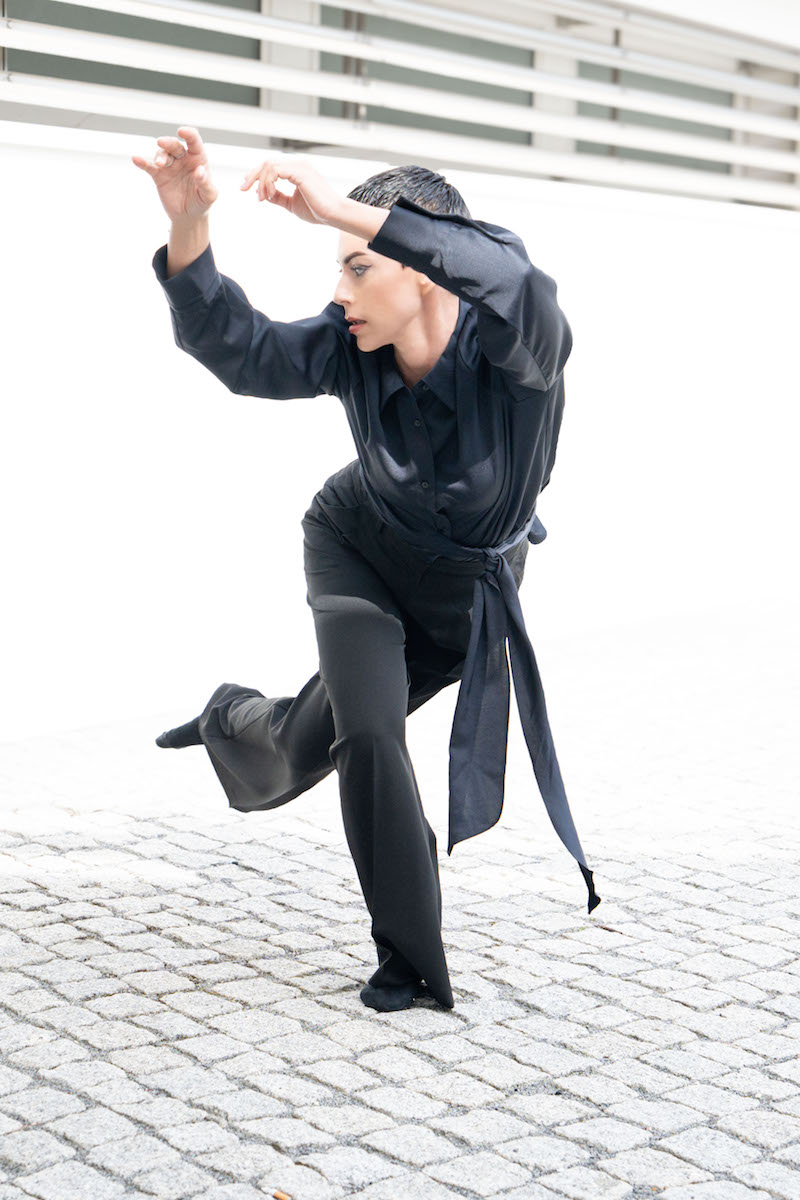
You arrived at the Kunstakademie Düsseldorf in 2005,initially enrolling in Markus Lüpertz’s class. You described that time as a radical moment, with just a suitcase, your portfolio, and very little money. You also had to learn a new language. What did leaving Romania and start ing over in Germany mean, especially in terms of shaping your artistic identity?
I had wanted to study art very deeply. I had been involved in the visual arts from an early age, and I attended an art school in Bistrița, Romania. Continuing my artistic education was already a dream of mine, so studying at the Kunstakademie Düsseldorf felt like an important continuation of the path I had chosen for myself.What I did not know was what I would encounter there. In the classes I studied in, I experienced bullying and rejection, and at times I felt that I was not accepted — not only as an artist, but also as a woman and as an individual. These experiences had a profound impact on me. They became part of my transformation, not only artistically but also as a person. They forced me to question my identity, to rebuild it and to search for my own position and voice. At the same time, my studies with Markus Lüpertz were extraordinary, particularly in what I experienced as a very direct and pure relationship between the artist, the professor and painting itself. Later, I moved to Thomas Grünfeld’s class. My fascination with objects, materials and spatiality created a turning point — and also a rupture — in my relationship with painting. Today, I am very grateful for that rupture. His class was open, experimental and avant-garde, with an active engagement with different media — film, sculpture, spatial installation and more. It changed my perspective on what I wanted to pursue and how I wanted to develop my artistic language. Rebuilding a new identity became, for me, the beginning of healing from trauma. It was a process of reconstruction, of searching, and of trying to find a sense of belonging. I felt uprooted.
You experimented with a gestural, free style of painting with Lüpertz that was similar to Abstract Expressionism. However, you realized fairly early on that this was not the right path for you. Later, through your work with Thomas Grünfeld, you transitioned from figuration to abstraction, focusing almost exclusively on the surface. When did you realize that you needed to change your approach to painting?
I think the major changes happened about eight years ago, when I finally gave myself the time and space to understand what I needed as an artist. Looking back, I feel that I have always been searching for myself. Each period of my work has been authentic to the person and artist I was at that particular moment — corresponding to my energy, my experiences and my development. My artistic research was always strongly connected to paper, drawing and sketching. These became important tools for understanding what truly interested me. In a way, the process itself was the research: through working, observing and experimenting, the direction of my painting gradually became clearer. So I wouldn’t say that there was one precise moment when I decided to change my painting. It was more a gradual realization that the painting needed to become a space for my own questions — and that I had to give myself permission to follow that process.
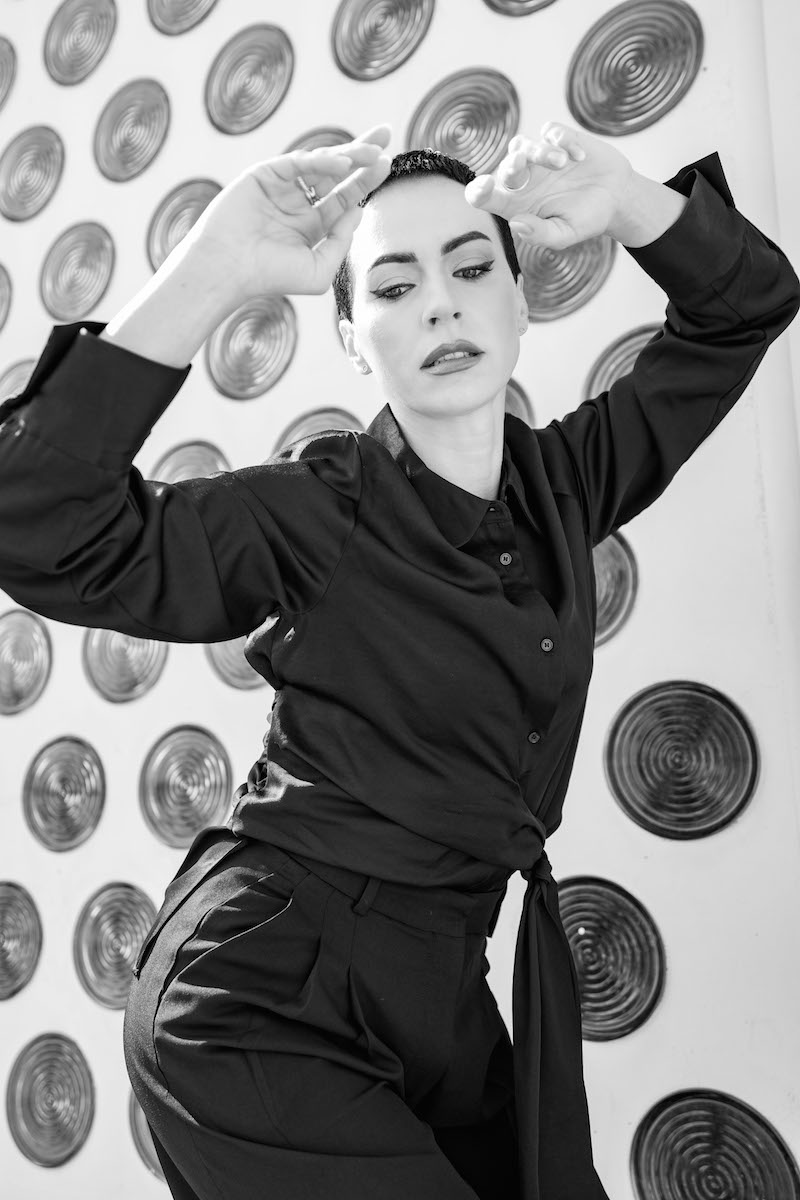
Line, surface, rhythm, repetition, and geometry have gradually become fundamental elements of your artistic language. In your work, however, these elements seem to continually challenge order rather than establish it. What is the relationship between rule and deviation, control and instability in your artistic practice?
For me, rule and deviation are closely connected. There is a lot of planning and control in my paintings. I choose the lines, proportions, repetitions and details very consciously. Every element has its place and is carefully considered. But within this structure, I am interested in creating movement. Rhythm can shift, lines can interrupt one another, and the eye can move through the surface in different directions. The deviation is not accidental; it happens within a structure that I have deliberately created. This becomes even more open in Movement Hybris, where the logic of the painting moves into space and into the body. There, movement can change the perception of a structure that was carefully constructed. For me, control creates the conditions for freedom. I need the structure in order to know where I can depart from it.
Music is another important element of your work. You have compared the repetition of forms to mathematical formulas and musical notes, which acquire meaning through modulation and interruption. How do you transform a sonic experience into a visual or spatial form?
Yes. Music, sound and frequencies can influence or even reconfigure the performative process, depending on what I am working on. They can change the rhythm, the timing and the way the body moves through space. In painting, the relationship is more structural. I can create algorithms and modules in which certain points are connected, almost like a graphic system, to generate geometric forms. Repetition, modulation and interruption then become ways of organizing the image. So I don’t translate sound directly into an image. Rather, I am interested in the way rhythm and structure can move between different forms — from sound, to movement, to space and finally to the surface of the painting.
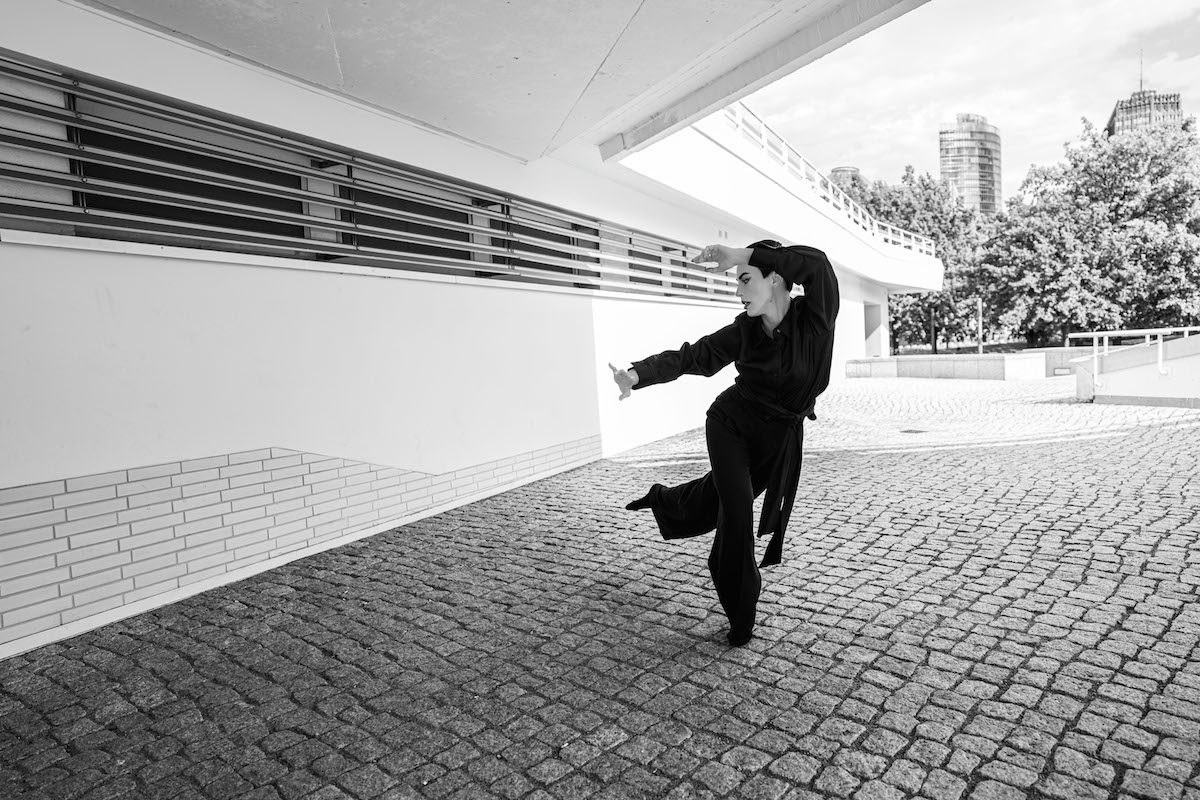
At a certain point, the pictorial surface becomes inadequate. Objects, installations, videos, sound, and, above all, performance begin to emerge. Was it the body that led you away from painting, or was it the need to physically enter the space that you had been representing up to that point?
I felt the need to physically enter the space I was working with — to work choreographically with it rather than simply represent it. The body became another way of thinking through space. With Movement Hybris, I began to explore how movement, spatiality and architecture are deeply connected to perception. I wanted to transform the way I experienced my own body and redefine my relationship to space — not only as something surrounding me, but as something I actively enter, negotiate and transform. For me, this was not really a departure from painting. It was an expansion of the pictorial thinking into the body, into space and into presence.
In performance projects such as Solid Sides and Into the Void, the body and space become increasingly important. Looking back on this journey, which steps were decisive in leading to Movement Hybris?
I think the decisive steps came through two different directions of research. In Solid Sides, I was working with boundaries — identity, borders and the limits we experience within social and political space. I was interested in how these boundaries are constructed around us and how they shape our sense of identity.Into the Void turned the focus inward. It was more about the human being itself, about the inner space we carry within us and the confrontation with our own existence. With Movement Hybris,these two directions began to meet. The question became how the inner and outer spaces of the human being are connected — how the body moves through architecture, how presence changes space, and how space, in turn, changes our perception of ourselves. That transition from the social boundary, to the inner human space, and finally to the relationship between body and space was an important path towards Movement Hybris.
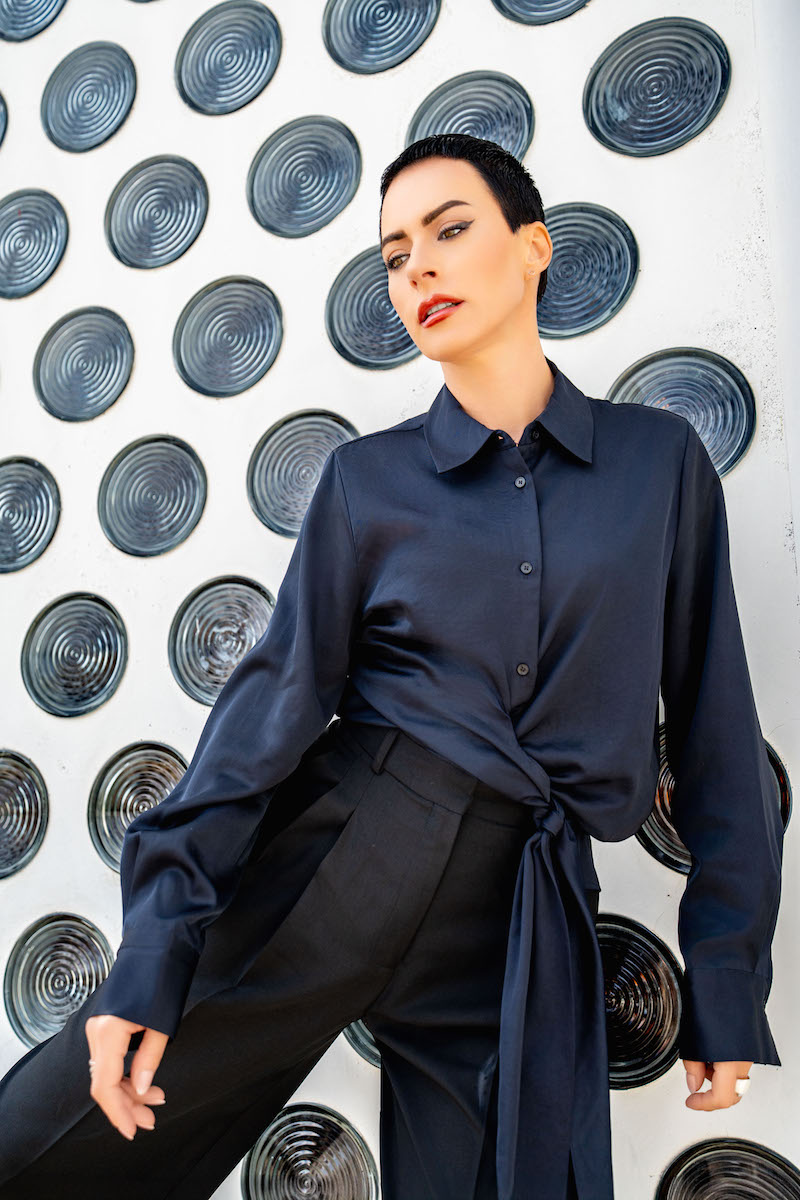
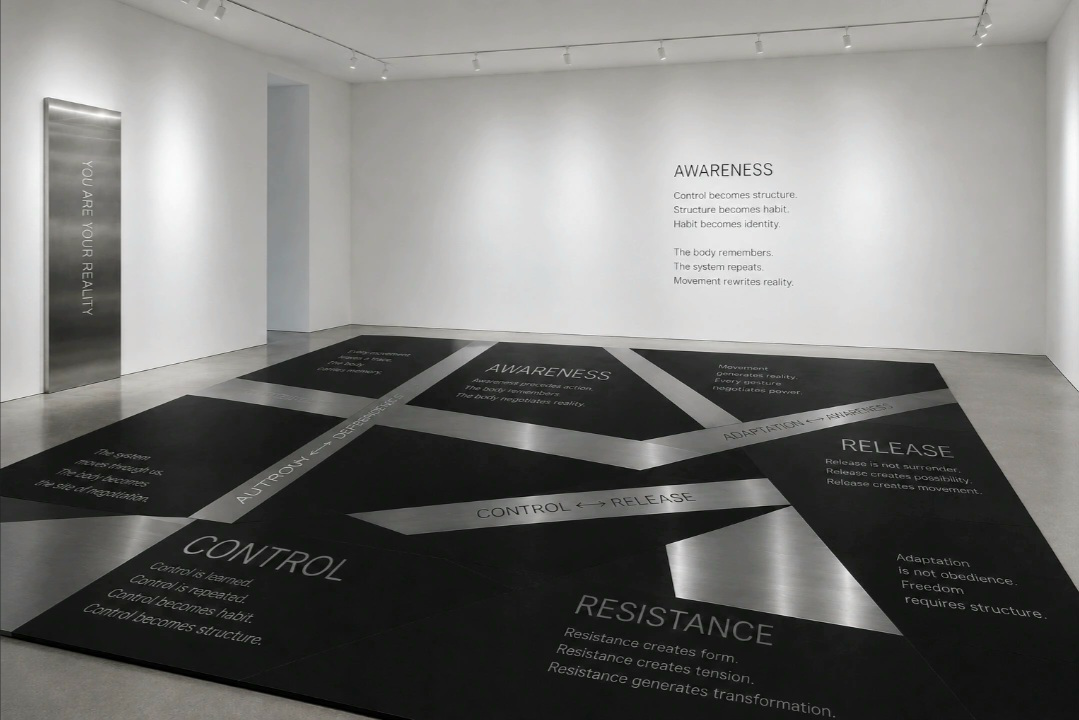
In Movement Hybris, you describe the body as “living, constantly transforming architecture.” This statement seems to incorporate many elements from your background, such as painting, architecture, geometry, and performance. What does it mean to conceive of the body as architecture?
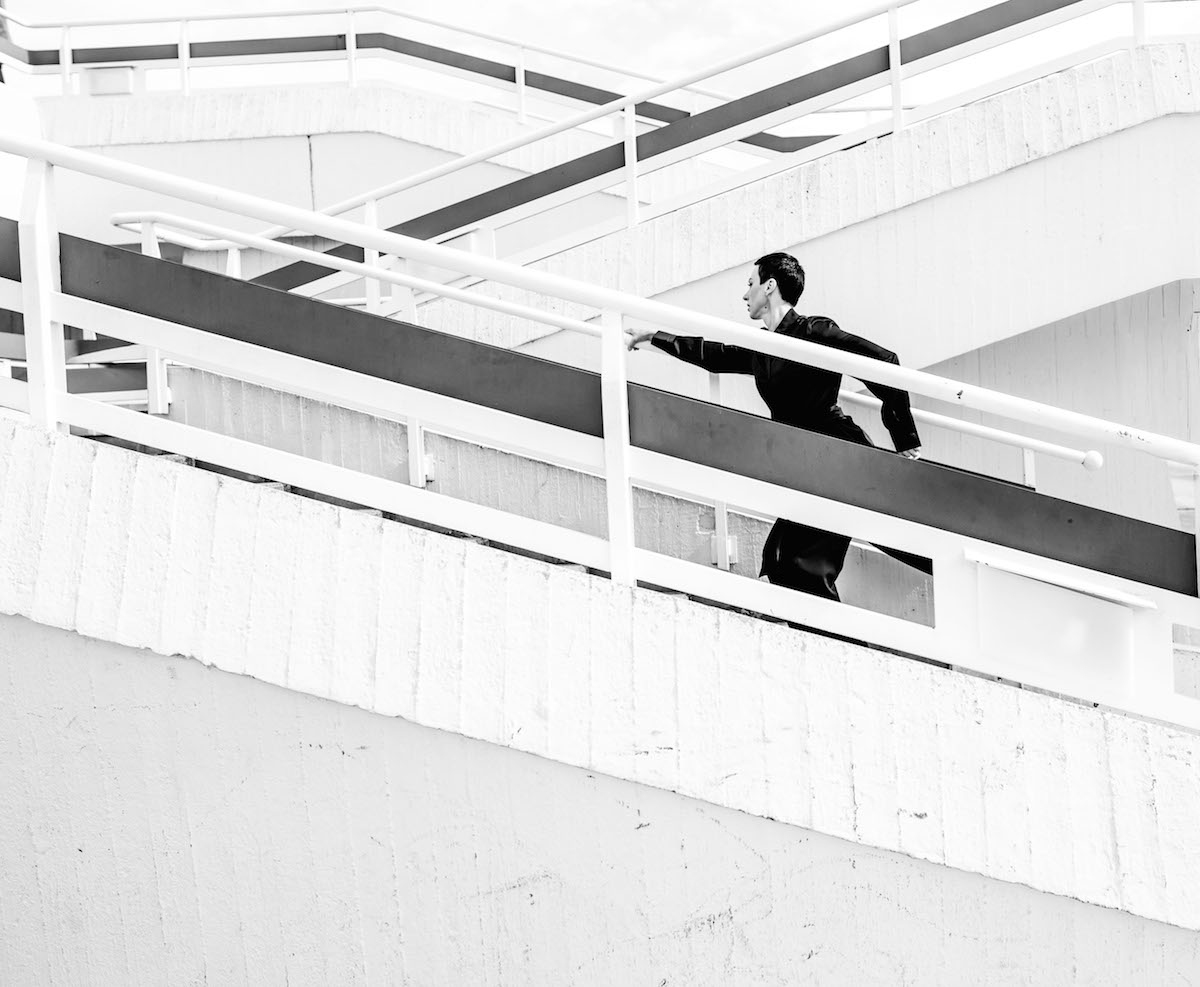
To conceive of the body as architecture means to see it as a structure that is constantly being built, transformed and negotiated through movement. The body has its own boundaries, proportions, tensions and internal spaces, but it is never static.Through movement, these structures change and interact with the architecture around them. For me, the body is both a space and an instrument for perceiving space. It carries an inner architecture while simultaneously responding to the external one.This is where painting, geometry and architecture enter Movement Hybris. Lines, structures and spatial relationships that I previously explored on the surface of the painting can become physical and performative through the body. The body is therefore not simply placed inside architecture. It becomes a living architecture itself — one that constantly transforms through presence and movement.
However, this project has a very personal origin. You explicitly mention emotional healing and a new understanding of your identity. To what extent was a personal experience necessary before developing a universal language that engages others?
I think the personal experience was necessary as a starting point. Movement Hybris grew out of a period of emotional healing, reconstruction and a new understanding of my own identity. But I didn’t want the work to remain autobiographical. Through movement, space and perception, the personal experience becomes something others can enter and experience through their own bodies and memories. For me, this is where the personal can become universal.

Through breath, tension, and movement, you seek to make invisible experiences such as fear, loss, vulnerability, desire, control, and transformation visible. Can the body hold onto a memory that evades representation and language?
Yes, I believe the body can retain a memory that exists before language. There are experiences we cannot fully explain or represent, but they remain in the body — in tension, in breath, in the way we hold ourselves or move through space. For me, movement becomes a way of accessing these invisible layers. Fear, vulnerability, desire or loss are not something I try to illustrate. I am interested in how they can be felt through the body and translated into presence, rhythm and movement, as “Bewegung,” “Dance”. Perhaps the body remembers what the mind has learned to leave unnamed. This is one of the reasons why the body became so important to my work: it can speak without having to explain itself.
The Greek term “hubris” traditionally refers to excess and arrogance, as well as the violation of a boundary. By shiftingits meaning toward the moment when the boundary is reached, negotiated, or crossed, you make transformation possible. Why did you choose a word with such strong connotations?
I chose the word “Hybris” precisely because of its tension and contradiction. Traditionally, it describes excess — crossing a boundary, going beyond what is considered acceptable. But I became interested in what happens at that exact point of crossing.For me, a boundary is not only something that limits us. It can also become the place where transformation begins. We reach it, negotiate with it, test it, and sometimes cross it. This has a very personal connection to my own experience. Movement Hybris grew from questioning the boundaries of identity, the body, space and perception — and from understanding that transformation often begins when we no longer remain where we were. So I kept the word because it carries a certain intensity. It contains both danger and possibility: the moment when you go too far can also be the moment when something new becomes possible. And yes it makes us aware!
I’m interested in a phrase that runs throughout the project: “Where does the body end, and where does space begin?” Is there a clear boundary between the two for you, or does Movement Hybris stem from an attempt to erase it?
For me, there is no clear boundary between the body and space once the body becomes fully present. The body is no longer only a physical body. Through awareness, it becomes a presence that connects with the space around it. I become aware of my breath, my weight, my movement, the distance between things — and suddenly space begins to expand. I feel it differently, not only with my eyes, but through my entire body. This is where Movement Hybris begins for me: in the moment when the distinction between body and space becomes less fixed. The body enters the space, but at the same time, the space enters the body through perception. I am not trying to erase the boundary completely. I am interested in making it permeable.
Presence is another central concept that you associate withnot only with awareness, but also responsibility and compassion. In a world dominated by the rapid production and consumption of images, does placing such importance on physical presence also have political significance?
Yes, I believe physical presence can have a political significance. But for me, it begins on a very personal level. To slow down is to become more aware of yourself — of your body, your thoughts, your emotions, and the way you affect the space and people around you. With this awareness comes responsibility and accountability. It requires a certain maturity to truly engage with your own life and with the lives of the people you encounter. In a world where we are constantly producing, consuming and responding to images, being genuinely present can become an act of resistance. It means not only looking, but seeing; not only reacting, but becoming conscious of how we participate. For me, presence is therefore not passive. It is an active form of engagement — with yourself, with others, and with the world you are part of.
Through a collaboration with Romanian director Ioan Cărmăzan on Angels in Disguise (Îngeri deghizați), the project is now entering the real of cinema. You will be responsible for the set design, performance scenes and choreography. You’re also participating as an actress. How does the language of Movement Hybris change when entering a cinematic narrative?
Movement Hybris is an artistic concept that can exist through different media — painting, performance, installation, video, photography and participatory situations. Each medium opens a different way of experiencing the same questions around body, space, perception and presence.
In cinema, these questions enter a narrative and become more temporal. Movement is no longer only something I experience in space; it becomes part of the language of the camera, the scene, the choreography and the character. Working with Ioan Cărmăzan allows me to bring Movement Hybris into a cinematic context without trying to translate it literally. I am interested in how the body, the architecture of the set, movement and the camera can create meaning together. For me, this is another expansion of the same artistic research into a different medium.
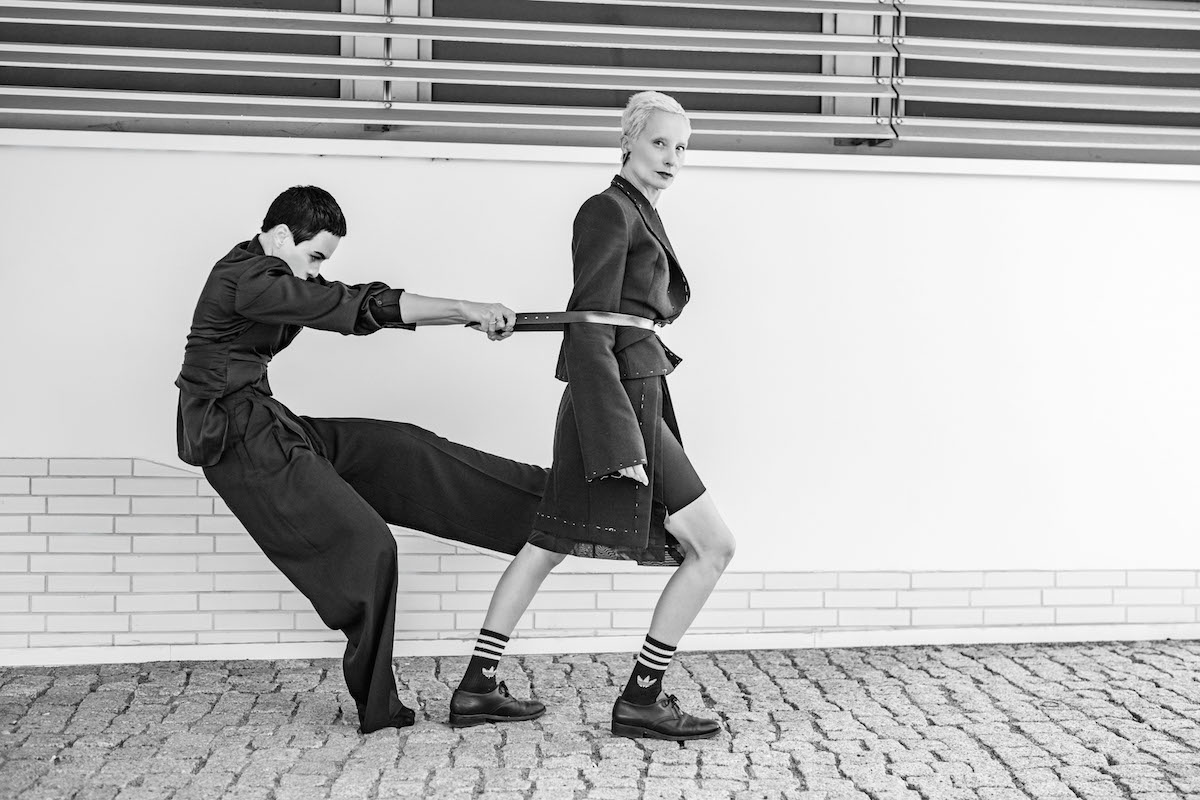
You said that you didn’t want to “illustrate” the characters’ psychology: rather you wanted to convey what cannot be expressed through dialogue. How do you create a choreography based on an emotional rupture?
I don’t begin with the emotion as something to be acted out. I begin with what the rupture does to the body. An emotional rupture can change the rhythm of breathing, the tension in the muscles, the distance between two bodies, or even the way someone occupies a space. I work from these physical changes and allow the movement to emerge from them. For me, choreography is not about illustrating what a character feels. It is about making the feeling physically present — allowing something that cannot be said to become visible through the body.
Movement Hybris does not have a definitive form. Do youwant to take it out of the studio and into museums, galleries, architectural spaces, and public spaces? Since the project will continue to evolve, what areas haven’t you explored yet, and which would you like to explore?
I think what I haven’t explored yet is the scale of the project — what Movement Hybris could become when it moves beyond the studio and enters larger architectural or public spaces. I am interested in situations where the work is no longer something people simply observe, but something they physically enter and experience. I would like to explore larger spatial structures, public environments, and also new forms of collaboration with other disciplines. But I don’t want to define its final form. For me, the openness is essential. Movement Hybris should continue to transform through the spaces, bodies and people it encounters.
Cover story: Marlon Red © Lukas Klimek