L’artista delle Isole Canarie condivide per cinque ore una voliera con 50 canarini, trasformando il proprio corpo in un territorio comune per riflettere su colonialismo, migrazione, identità e addomesticamento.
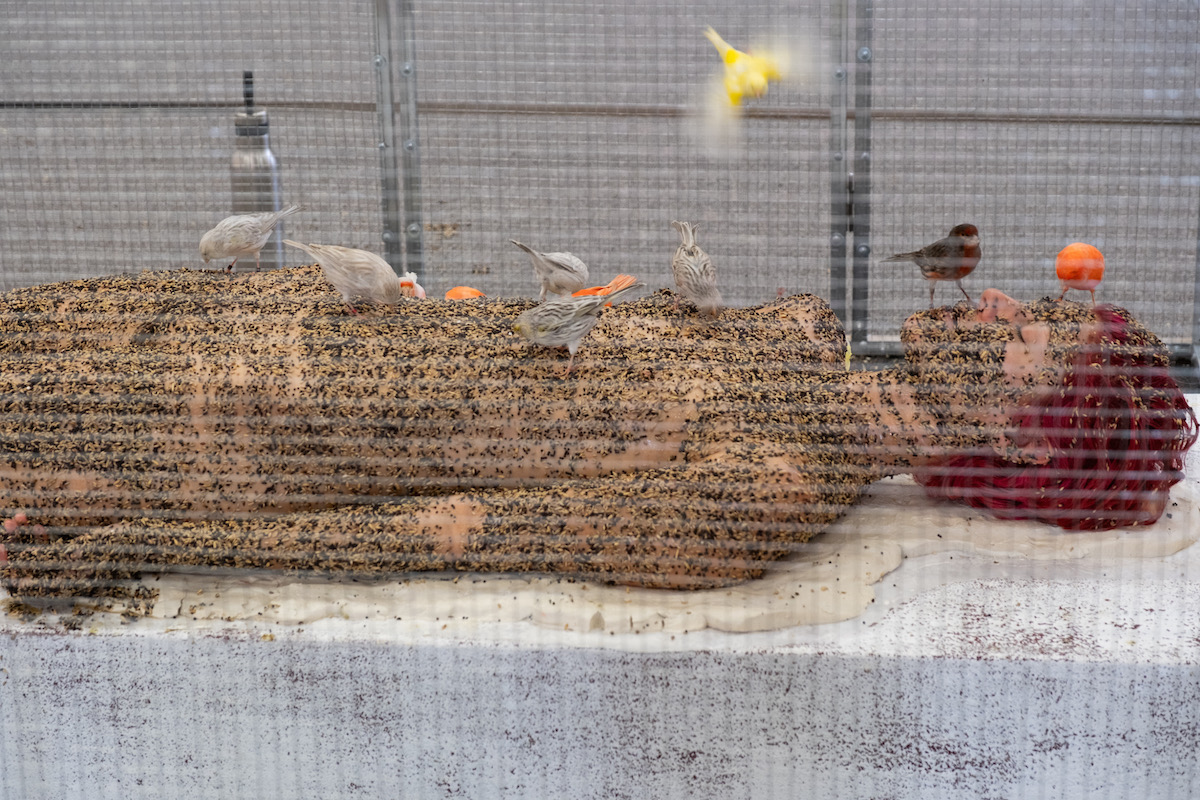
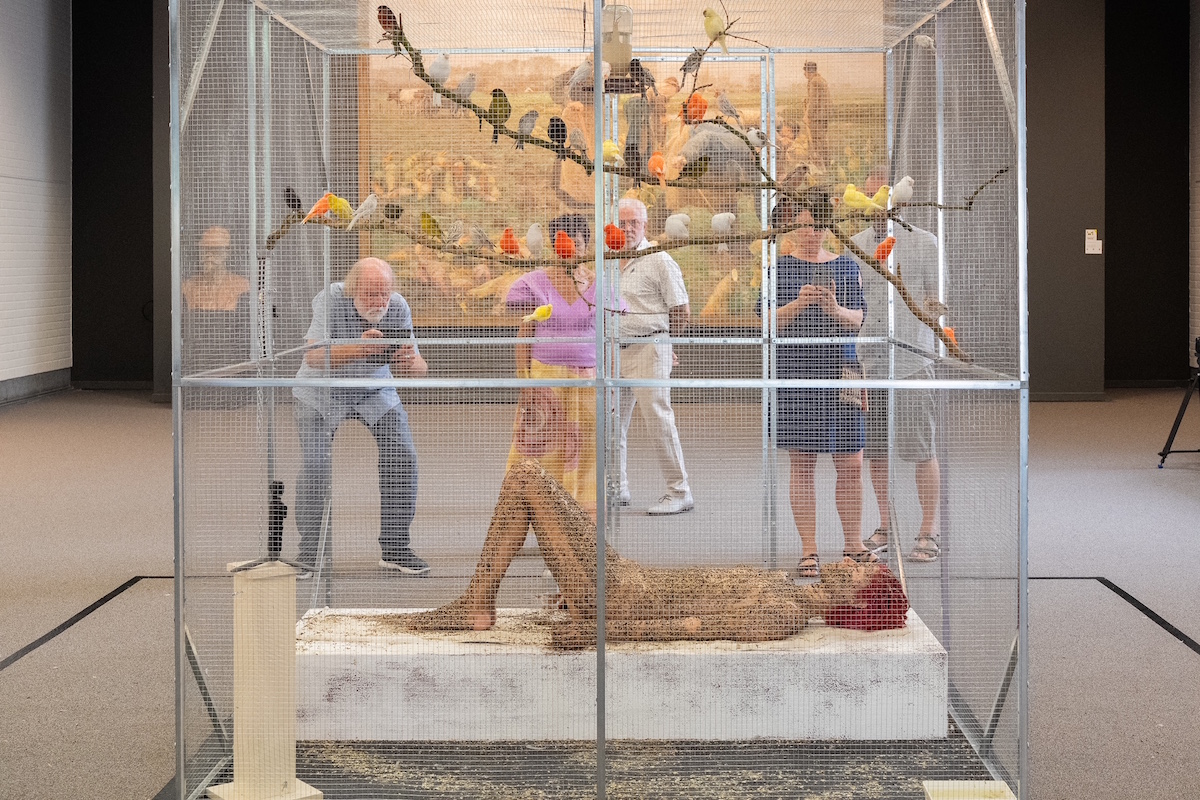
Ricoperta di miele e semi, Nayra Martín Reyes (Tenerife, 1979) entra in una voliera insieme a cinquanta canarini e attende. Gli uccelli si avvicinano progressivamente, mangiano sul suo corpo, vi si posano, cantano. La distanza tra essere umano e animale si assottiglia fino a trasformare la performance in un dispositivo di coesistenza, ma anche in una riflessione sulla migrazione, sull’addomesticamento e sulle tracce ancora presenti della storia coloniale. AKANARI è la sua nuova performance presentata al museo MUdel di Deinze, in Belgio, in occasione dell’apertura della decima Biënnale van de Schilderkunst. Un’azione nella quale la relazione tra il corpo umano e quello animale diventa il punto di partenza per indagare la storia postcoloniale delle Isole Canarie.
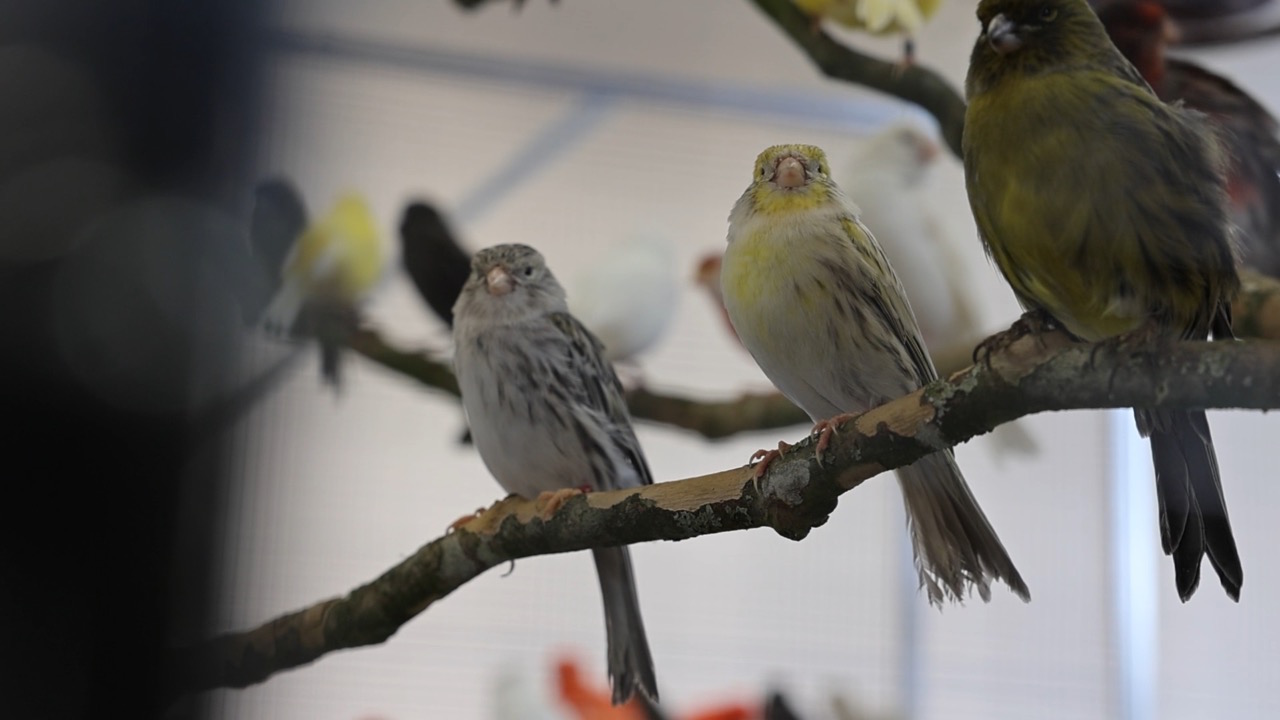
Al centro del lavoro c’è il canarino, presenza apparentemente familiare e domestica dietro la quale si nasconde una vicenda profondamente intrecciata alla storia dell’arcipelago. Il Serinus canaria deve il proprio nome proprio alle Isole Canarie, suo habitat originario. Dopo la conquista castigliana del XV secolo, esemplari selvatici iniziarono a essere catturati e trasportati in Europa. Tutti i canarini domestici oggi esistenti discendono da quegli animali sottratti al loro ambiente naturale e progressivamente trasformati attraverso l’allevamento e la selezione. Commercializzati in diversi paesi europei e particolarmente apprezzati nei Paesi Bassi, nella Spagna meridionale e nell’Italia settentrionale, i canarini divennero nel tempo simboli di esotismo, prestigio e cosmopolitismo, entrando parallelamente nell’iconografia artistica e nella poesia. Secoli di allevamento selettivo ne hanno poi modificato caratteristiche fisiche e comportamentali: colore, canto e postura sono stati selezionati secondo criteri stabiliti dall’uomo.
È proprio questa trasformazione a interessare l’artista. Il canarino diventa una figura attraverso cui leggere non soltanto la colonizzazione delle Canarie, ma fenomeni più ampi di sradicamento, adattamento e ridefinizione dell’identità. La manipolazione del corpo animale trova così una risonanza nella storia dei corpi umani sottoposti a migrazione, assimilazione e sradicamento. “La storia e il viaggio di questi uccelli sono strettamente legati alla mia storia e a quella di molti altri migranti”, spiega l’artista. “Rimaniamo fedeli a noi stessi, le nostre radici non cambiano, ma ci siamo trasformati per sopravvivere in questo nuovo ambiente”.
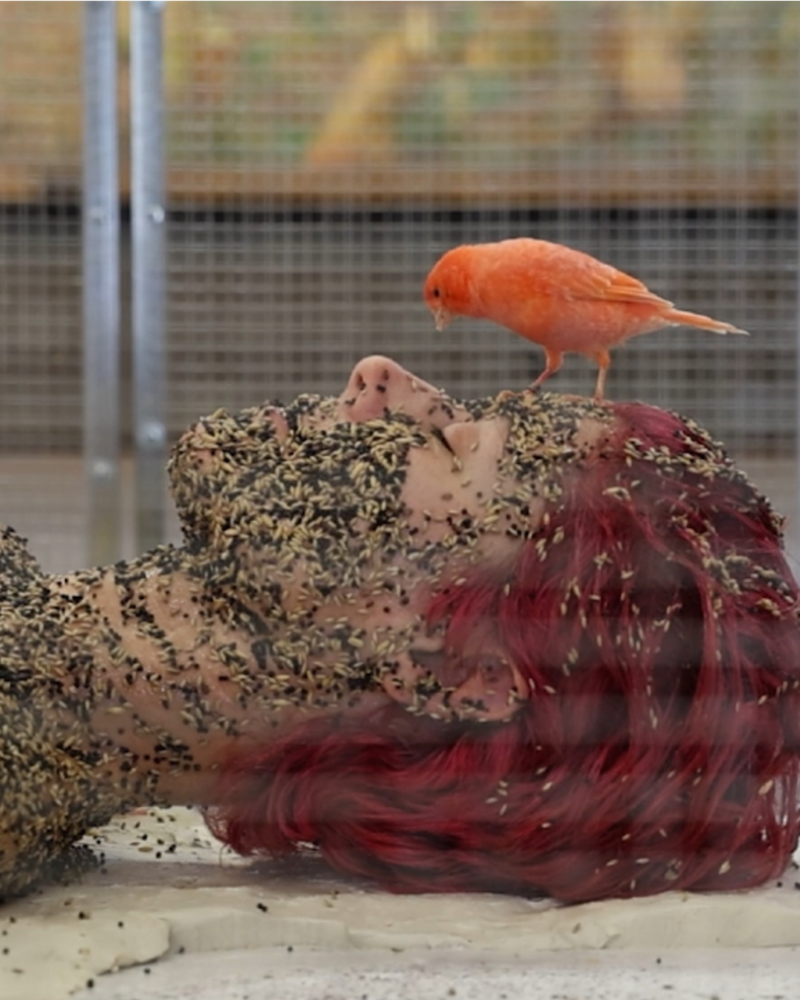
In AKANARI, tuttavia, Martín Reyes non si limita a utilizzare l’animale come metafora. La presenza dei 50 canarini introduce nella performance una componente di inevitabile imprevedibilità. L’artista predispone le condizioni dell’azione, ma non può controllarne completamente lo sviluppo. Sono gli uccelli a decidere se e quando avvicinarsi, dove posarsi, quanto a lungo rimanere sul suo corpo. L’opera nasce dunque all’interno di una negoziazione continua tra specie differenti. Il corpo umano perde così la propria centralità per diventare ambiente: una superficie disponibile alla presenza dell’altro. Il miele e i semi che ricoprono la pelle trasformano l’artista in fonte di nutrimento, invertendo almeno simbolicamente il rapporto di dominio che ha storicamente regolato l’addomesticamento animale.
Attiva tra Belgio e Spagna, Nayra Martín Reyes lavora con performance, installazione e pittura affrontando questioni legate alla memoria coloniale, all’ecologia, alla sessualità e alle identità fluide. Le Isole Canarie costituiscono uno dei nuclei ricorrenti della sua pratica: un territorio fragile dal punto di vista ambientale e, contemporaneamente, segnato dalle conseguenze storiche della colonizzazione spagnola. AKANARI prosegue la ricerca sviluppata con XAXO, progetto incentrato sulle mummie indigene Guanche sottratte alle Canarie e tuttora conservate in musei spagnoli e di altri paesi europei. Dopo l’azione performativa, l’opera continua sotto forma di installazione e documentazione video al MUdel di Deinze, dove rimarrà visibile fino al 18 ottobre 2026.
Akanari: Nayra Martín Reyes’ New Performance
The Canary Island artist spends five hours sharing an aviary with 50 canaries. In this performance, she transforms her body into a common space to reflect on colonialism, migration, identity, and domestication.
Nayra Martín Reyes (Tenerife, 1979) enters an aviary covered in honey and seeds along with 50 canaries and waits. The birds gradually approach her, pecking at her body and perching on it while singing. The distance between human and animal narrows until the performance becomes a reflection on coexistence, migration, domestication, and the lingering traces of colonial history. Titled AKANARI, the performance was presented at the MUdel Museum in Deinze, Belgium, on the occasion of the opening of the 10th Biënnale van de Schilderkunst. It is a performance in which the relationship between human and animal bodies serves as a starting point for exploring the postcolonial history of the Canary Islands.
At the heart of this work is the canary, a seemingly familiar and domesticated bird whose story is deeply intertwined with the history of the Canary Islands. The Serinus canaria owes its name to its native habitat, the Canary Islands. Following the Castilian conquest in the 15th century, wild specimens were captured and transported to Europe. All domestic canaries today are descended from those birds that were taken from their natural environment and gradually transformed through breeding and selection. Canaries were marketed in various European countries, particularly in the Netherlands, southern Spain, and northern Italy. They eventually became symbols of exoticism, prestige, and cosmopolitanism while finding their way into artistic iconography and poetry. Centuries of selective breeding have altered their physical and behavioral characteristics, including color, song, and posture, according to human-established criteria.
This transformation is precisely what interests the artist. The canary becomes a figure through which to interpret the colonization of the Canary Islands and broader phenomena of uprooting, adaptation, and identity redefinition. The manipulation of the animal’s body resonates with the history of human bodies subjected to migration, assimilation, and displacement. “The history and journey of the birds are closely linked to my own story and that of many other migrants” she states. “We remain true to ourselves; we still come from where we come from, but we have transformed in order to survive in this new environment.”
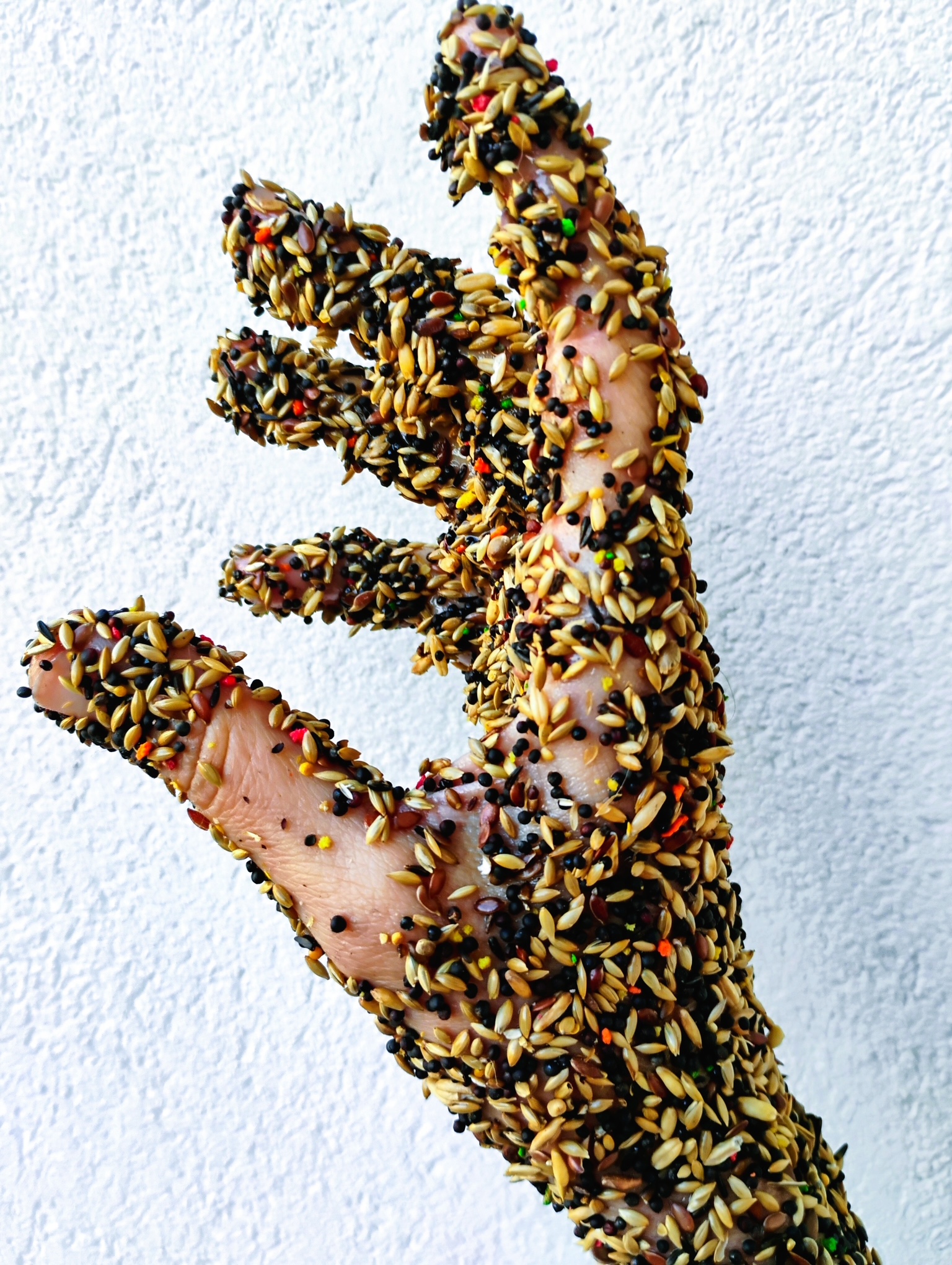
However, in AKANARI, Martín Reyes does more than use the animal as a metaphor. The presence of the fifty canaries introduces an element of unpredictability to the performance that is inevitable. Although the artist sets the conditions for the action, she cannot fully control how it unfolds. The birds decide if and when to approach, where to perch, and how long to remain on his body. Thus, the work emerges from an ongoing negotiation between different species. The human body loses its centrality, becoming an environment—a surface open to the presence of others. The honey and seeds covering the artist’s skin transform her into a source of nourishment, symbolically reversing the relationship of domination that has historically governed the domestication of animals.
Nayra Martín Reyes lives and works between Belgium and Spain. Through performance, installation, and painting, she addresses issues related to colonial memory, ecology, sexuality, and fluid identities. The Canary Islands are a recurring focal point in her work because they are an environmentally fragile territory marked by the historical consequences of Spanish colonization. Her project AKANARI builds upon research conducted through XAXO, which focuses on indigenous Guanche mummies removed from the Canary Islands and currently preserved in museums in Spain and other European countries. Following the performance, the project will continue as an installation with video documentation at MUdel in Deinze, where it will be on display until October 18, 2026.
———
Cover story: AKANARI. Nayra Martín Reyes. MUdel museum, Deinze, Belgium, 2026. Ph. Monica Ruiz Loyola
This art project is supported by the Spanish Embassy in Belgium and in collaboration with the Flemish Club of Colour Canaries (Vlaamse Kleurkanarieclub). With special thanks to the latter, which has kindly provided the canaries for this performance.