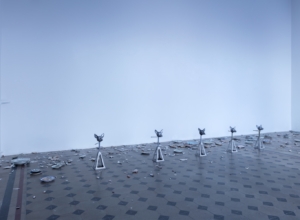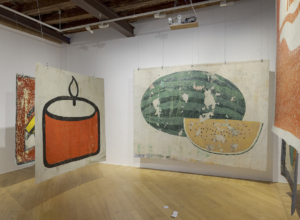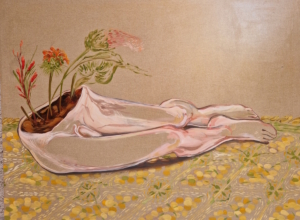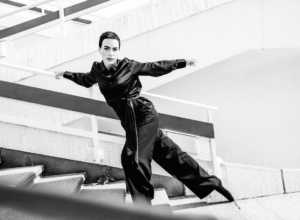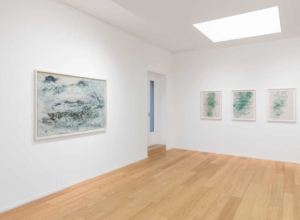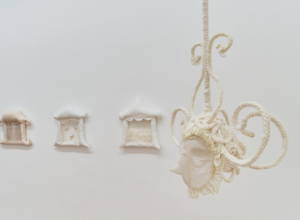
Alla Gramma_Epsilon Gallery di Atene, la prima personale greca dell’artista italiana indaga il rapporto tra memoria, identità e trasformazione. Un percorso attraverso oltre vent’anni di ricerca, nel quale il gesto del cucire diventa strumento di relazione tra corpo, materia e tempo.
Che cosa rimane allora di un’esperienza quando le persone, gli oggetti e i luoghi che l’hanno generata si trasformano? E in quale momento un gesto ordinario, ripetuto fino a diventare quasi invisibile, acquista la capacità di produrre nuovi significati? Muove da questi interrogativi la mostra di Maria Jole Serreli, “What Remains, What Changes”, ospitata sino al 30 dicembre 2026 alla Gramma_Epsilon Gallery di Atene. Curata da Panos Giannikopoulos e Paolo Cortese, l’esposizione riunisce circa quaranta opere appartenenti a differenti momenti della produzione dell’artista, offrendo una lettura trasversale di un percorso sviluppato nell’arco di oltre vent’anni e focalizzato sui temi del corpo, della memoria, sulle relazioni e il ruolo dell’arte. Il progetto segna la prima personale di Serreli in Grecia e inaugura simbolicamente il secondo quinquennio di attività della galleria.
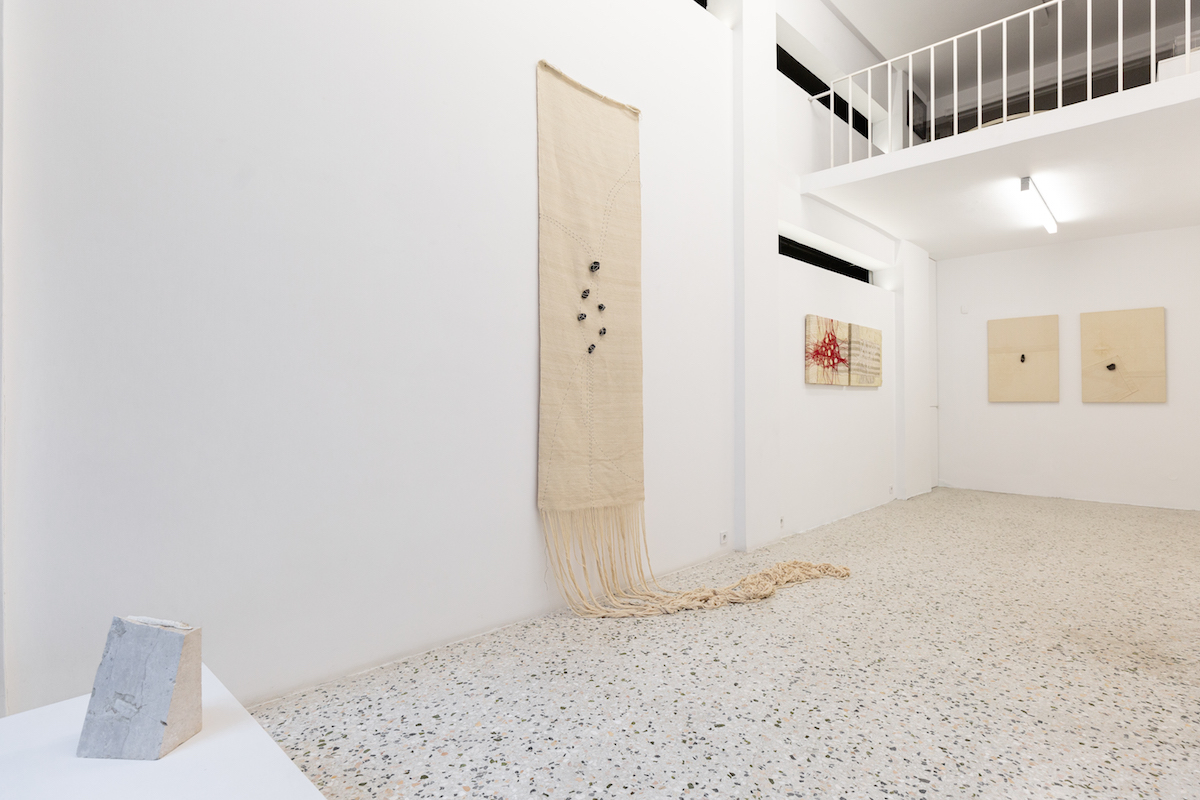
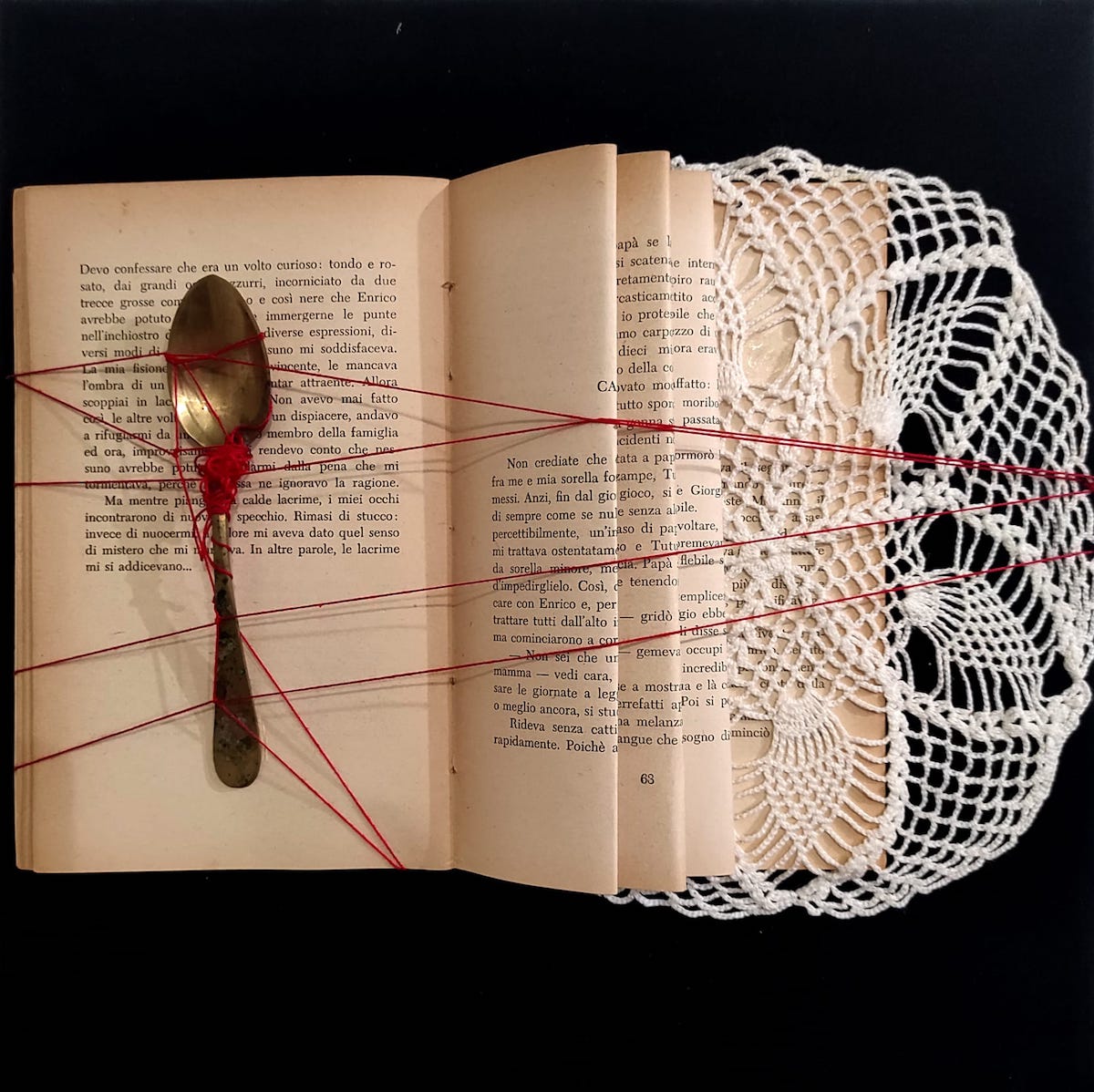
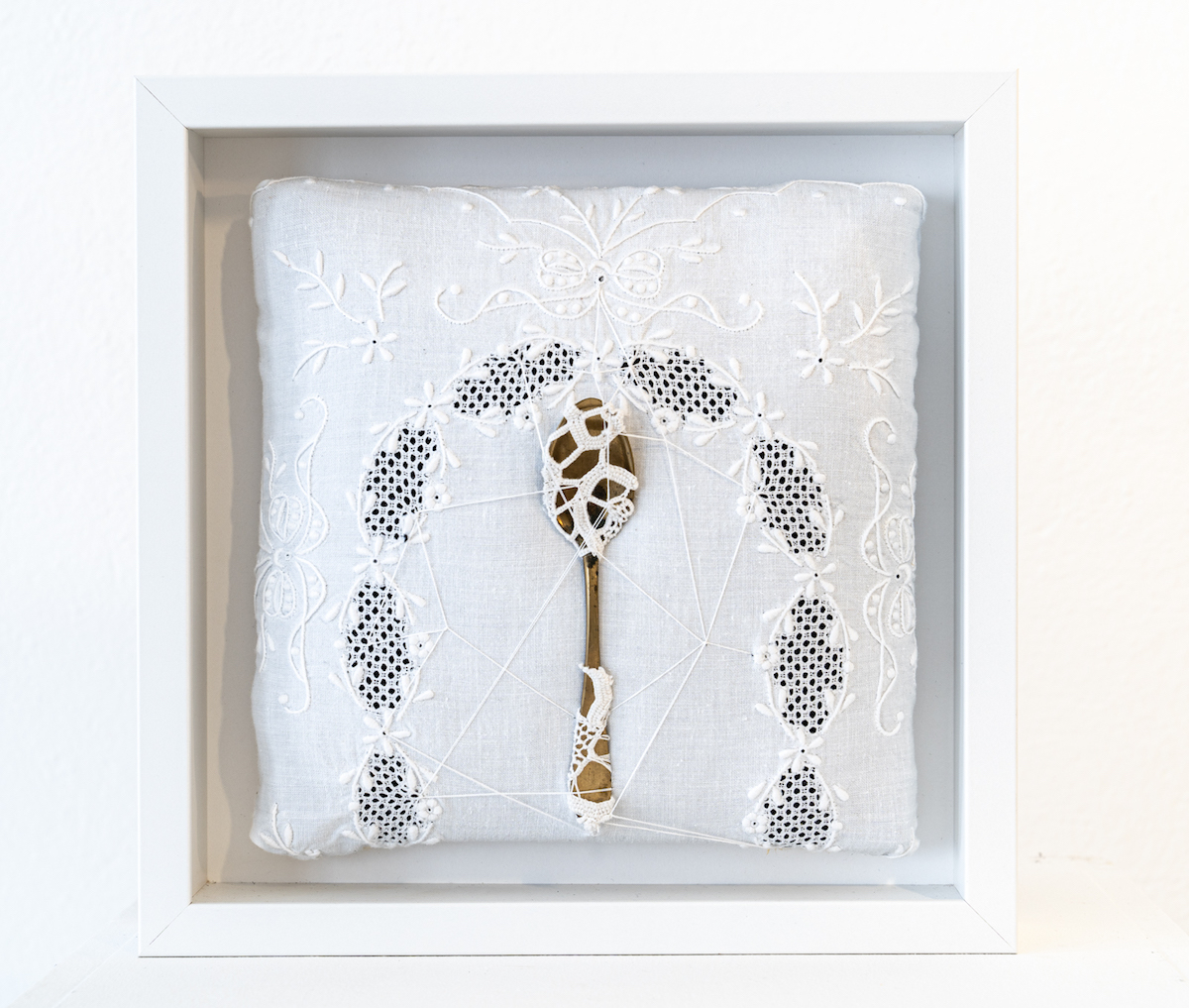
Nata a Roma nel 1975, Serreli vive e lavora in Sardegna, territorio che nella sua ricerca assume un significato ben più complesso della sola appartenenza geografica. La sua pratica multidisciplinare spazia dal tessile, alla scultura, la ceramica e il marmo, costruendo un vocabolario espressivo nel quale i materiali non sono mai supporti neutri, ma depositari di esperienze, relazioni e temporalità differenti. Una parte significativa del suo lavoro prende origine dagli oggetti conservati nella casa di famiglia in Sardegna. Tessuti, fili e manufatti domestici, spesso segnati da decenni di utilizzo, vengono sottratti alla loro funzione originaria per assumere nuove configurazioni plastiche e spaziali. Non si tratta semplicemente di recuperare materiali del passato, ma piuttosto di riconoscere in essi una memoria che si è stratificata. Quella delle mani che li hanno lavorati, dei corpi che li hanno utilizzati, delle abitudini e delle relazioni che hanno contribuito a determinarne la forma.
Cucito, ricamo e rammendo diventano così strumenti di un’indagine che tiene insieme dimensione privata e memoria collettiva. Pratiche tradizionalmente associate all’universo domestico femminile, spesso escluse dalle gerarchie storiche delle arti maggiori, vengono riconosciute come forme di conoscenza e dispositivi di trasmissione culturale. Il materiale ereditato non viene tuttavia conservato nella sua integrità, ma sottoposto a una trasformazione che ne modifica la funzione senza cancellarne la provenienza. In questo contesto, la casa assume sia dimensione fisica che mentale: luogo di appartenenza e protezione, ma anche spazio nel quale si costruiscono le identità, si apprendono i gesti e si negoziano le possibilità di autonomia. Gli oggetti che ne provengono portano nello spazio pubblico dell’arte frammenti di una storia personale che, attraverso il processo creativo, acquisisce una risonanza universale. Nel corso della sua ricerca, l’artista ha sperimentato linguaggi e materiali differenti, mantenendo una profonda coerenza espressiva. Il filo si emancipa dal telaio per assumere una dimensione scultorea, confrontandosi con la resistenza di materiali come la pietra vulcanica, l’ossidiana e il marmo, legati al territorio sardo. L’impossibilità di attraversarli trasforma il gesto del cucire in quello dell’avvolgere, dando origine a nuove relazioni tra materia, forma e temporalità.
“What Remains, What Changes” riunisce lavori appartenenti ai cicli Ikigai, Animas, Il peso del sonno e Fili fuori telaio, oltre a Senescenza, nuova serie presentata per la prima volta in occasione della mostra ateniese. L’allestimento rinuncia a una successione strettamente cronologica, privilegiando le corrispondenze formali e concettuali tra opere realizzate in momenti differenti. In occasione dell’inaugurazione, la galleria ha presentato SO FAR, pubblicazione dedicata ai primi cinque anni di attività, dal 2021 al 2026, mentre un catalogo bilingue con testi dei due curatori accompagna il progetto.
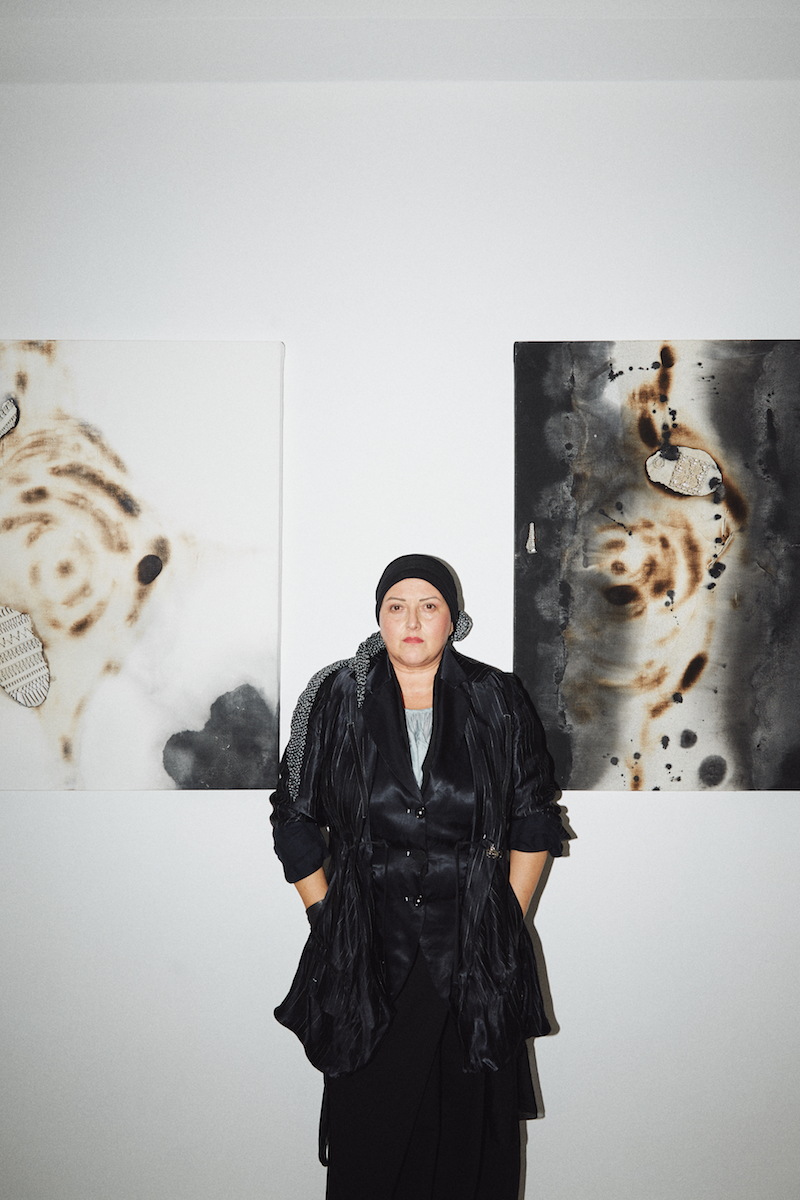
“La mostra è anche un’occasione per guardare retrospettivamente al lavoro – chiosa l’artista. Ho avuto modo di riflettere a lungo in quest’ultimo anno durante i preparativi del progetto, grazie soprattutto al supporto della galleria. Le opere raccolte nei miei primi venticinque anni di ricerca nascono dall’esigenza del racconto, dal mio bisogno di mantenere la memoria degli affetti, attraverso oggetti e tessuti appartenuti alla mia famiglia. Volevo ricordare le donne che mi hanno cresciuta e tenerle vive con me per sempre. Fino a poco tempo fa mi sentivo semplicemente una cantastorie, ma portare Animas in giro per il mondo mi ha permesso di condividere la mia vita d’affetto, trasformandola nella storia di altri, in quella di ognuno di noi. Il tempo, la sperimentazione, i viaggi mi hanno permesso di espandere l’orizzonte, guardando altre vite e altre famiglie, abbandonando la narrazione individuale. Oggi entro nel profondo dell’essere umano, vivendolo appieno in questa nostra contemporaneità confusa, vivendone le sofferenze, le lotte, la violenza e il bisogno coraggioso di trovare la propria identità. Sono così tornata ad utilizzare la pietra e il marmo e il metallo ha preso il posto del filo. Con la scultura, del resto, ho iniziato il mio percorso artistico nel 1999. So per certo che continuerò a narrare storie, ma lo farò con un occhio più attento nei confronti di questa umanità impaurita, che diventerà materiale su cui lavorare per il futuro”.
Maria Jole Serreli: “What Remains, What Changes”
This is the Italian artist’s first solo exhibition in Greece. It is taking place at the Gramma_Epsilon Gallery in Athens and explores the relationship between memory, identity, and transformation. The exhibition is a journey through more than twenty years of Serreli’s artistic practice, during which sewing became a means of connecting the body, matter, and time.
What remains of an experience when the people, objects, and places that gave rise to it have changed? At what point does an ordinary gesture, repeated until nearly invisible, gain the ability to produce new meanings? These questions form the basis of Maria Serreli’s exhibition, which is on view through December 30, 2026. Curated by Panos Giannikopoulos and Paolo Cortese,the exhibition brings together approximately forty works spanning different periods of the artist’s career. It provides a thorough overview of a body of work developed over more than twenty years, with a focus on themes such as the body, memory, relationships, and the role of art. This exhibition is Serreli’s first solo exhibition in Greece and symbolically inaugurates the gallery’s second five-year period of activity.
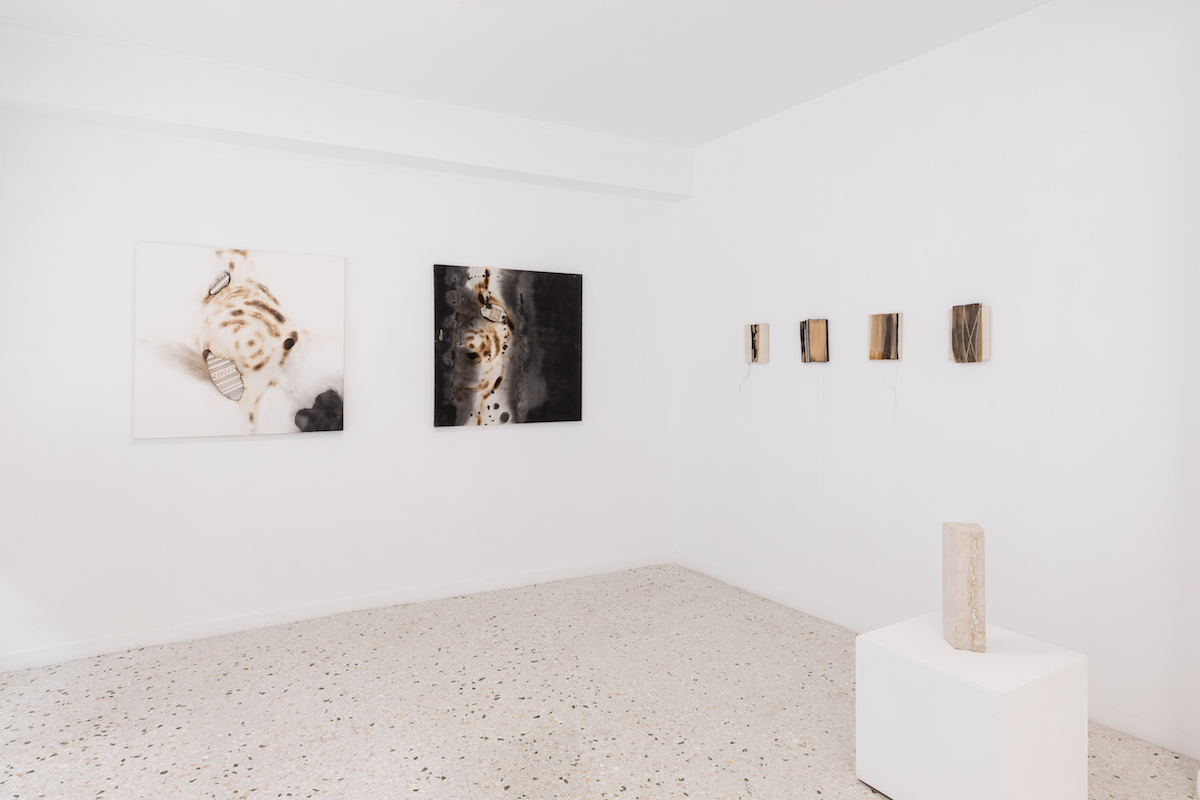
Serreli was born in Rome in 1975 and currently lives and works in Sardinia. In her artistic practice, Sardinia has a meaning far beyond mere geographical affiliation. Her multidisciplinary work includes textiles, sculpture, ceramics, and marble. She uses materials as repositories of different experiences, relationships, and temporalities to construct an expressive vocabulary. Much of her work is inspired by objects preserved in her family home in Sardinia. Fabrics, threads, and household items—often bearing the marks of decades of use—are stripped of their original function and take on new plastic and spatial forms. Her goal is not merely to recover materials from the past, but also to recognize in them a layered memory—the memory of the hands that worked them, the bodies that used them, and the habits and relationships that helped shape them.
Thus, sewing, embroidery, and mending are used to explore the intersection of the private sphere and collective memory. Traditionally associated with the female domestic sphere, these practices are often excluded from historical hierarchies of the “major” arts. However, they are now recognized as forms of knowledge and mechanisms for cultural transmission. Nevertheless, the inherited material is not preserved in its entirety; rather, it undergoes a transformation that alters its function without erasing its origins. In this context, the home takes on physical and mental dimensions. It is a place of belonging and protection. It is also a space where identities are constructed, gestures are learned, and possibilities for autonomy are negotiated. Objects originating from this space bring fragments of a personal history into the public art space. Through the creative process, this history acquires universal resonance. Throughout her practice, the artist has experimented with different languages and materials while maintaining profound expressive coherence. The thread breaks free from the loom and takes on a sculptural dimension, engaging with materials tied to the Sardinian landscape, such as volcanic rock, obsidian, and marble, which resist being woven. The inability to pierce these materials transforms sewing into wrapping, creating new relationships between matter, form, and temporality.
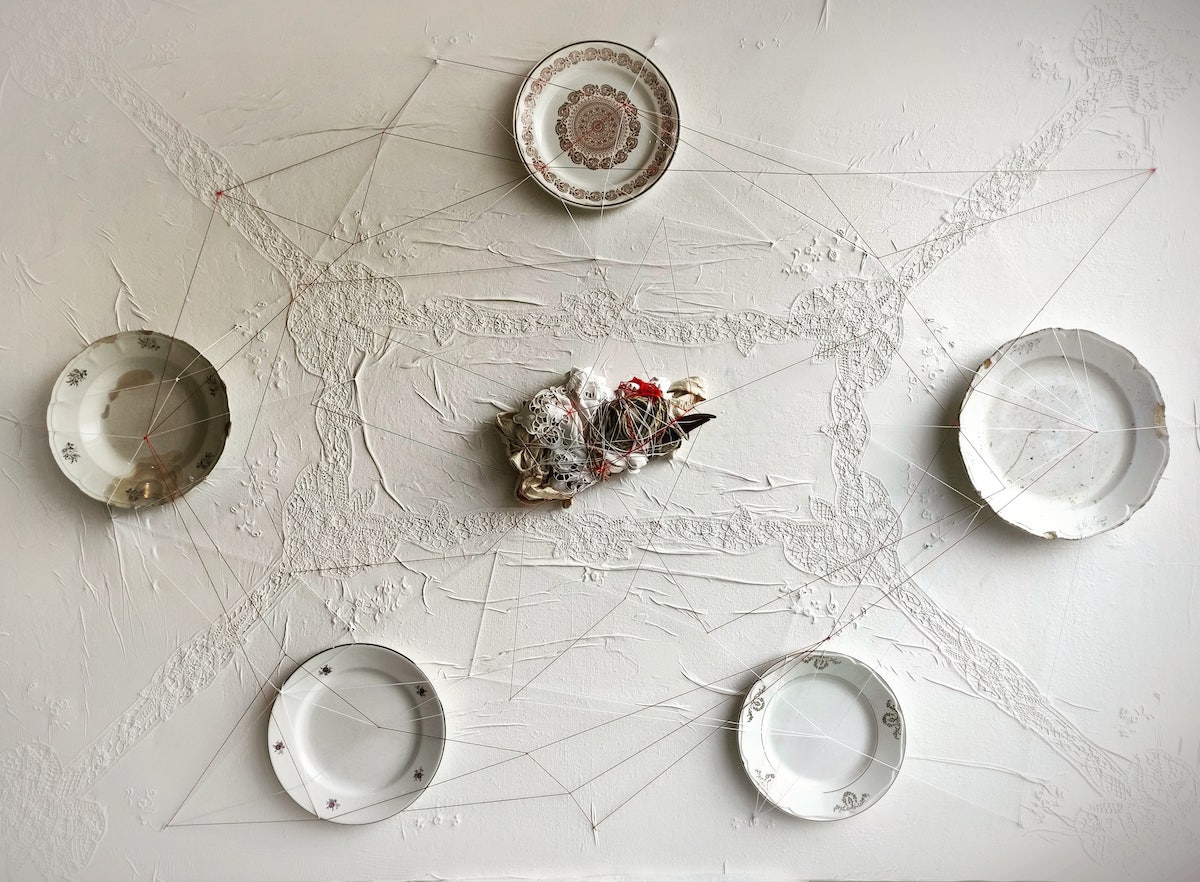
“What Remains, What Changes” brings together works from the series Ikigai, Animas, Il peso del sonno, Fili fuori telaio, and Senescenza, the latter of which is being presented for the first time at the Athens exhibition. Rather than following a strict chronological order, the layout of the exhibition emphasizes the formal and conceptual connections between works created at different times. At the opening, the gallery presented SO FAR, a publication commemorating its first five years of activity from 2021 to 2026. A bilingual catalog featuring texts by the two curators accompanies the project.
“This exhibition is also an opportunity for me to reflect on my work,” notes the artist. “Over the past year, while preparing for this project, I’ve had the chance to reflect at length, thanks above all to the gallery’s support. The works gathered from my first twenty-five years of artistic exploration stem from my need to tell stories and preserve the memories of my loved ones through the objects and fabrics that belonged to my family. I wanted to honor the women who raised me and keep them with me forever. Until recently, I simply saw myself as a storyteller. However, sharing ‘Animas’ around the world has allowed me to transform my story of love into the story of each and every one of us. Time, experimentation, and travel have broadened my horizons. I have observed other lives and families, moving beyond individual storytelling. Today, I delve into the depths of the human condition, fully experiencing it in our confused contemporary world—embracing its suffering, struggles, and violence, as well as the courageous need to find one’s own identity. I have returned to working with stone and marble; metal now replaces thread. After all, I began my artistic journey with sculpture in 1999. I know for certain that I will continue to tell stories, but I will do so with a more attentive eye toward this fearful humanity. This will be the material I work with in the future.”
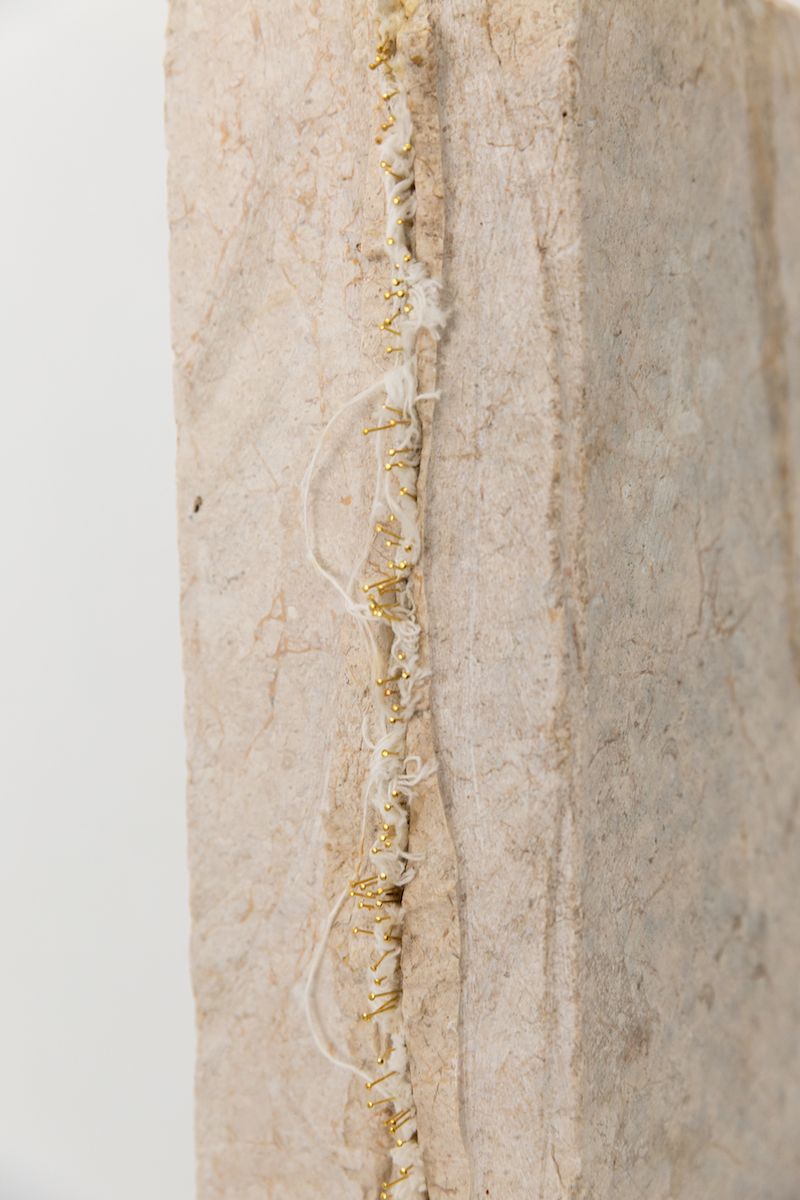
Cover Story: Maria Jole Serreli, Equilibri, 2023
—————-
MARIA JOLE SERRELI. What Remains, What Changes
Curated by Panos Giannikopoulous and Paolo Cortese
With the Patronage of
Embassy of Italy in Greece, Italian Cultural Institute of Athens
30 Set – 30 Dec 2026
Opening: 30 Sept at 18:00
Gramma_Epsilon Gallery
Agathonos, 6 10551 Athens